

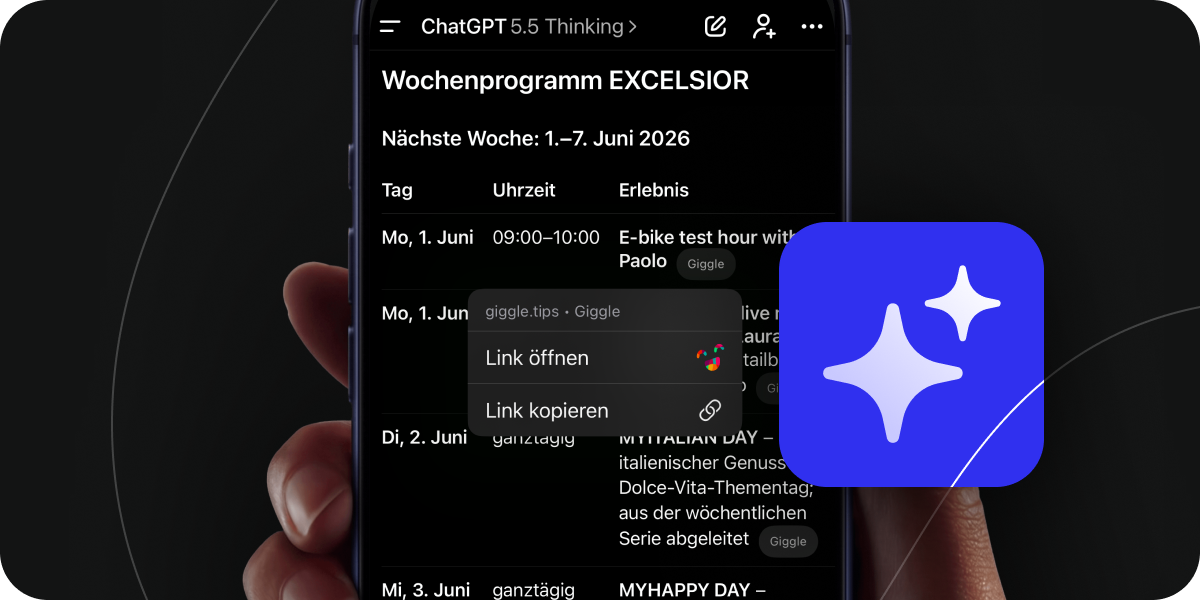
How Giggle.tips makes hotel experiences structured and visible for ChatGPT, Claude, and Google AI Overviews.
The way guests plan their vacations is changing radically. According to recent studies, 78 percent of travelers worldwide are already using AI-based tools for trip planning in 2026 . For hoteliers, this means traditional Search Engine Optimization (SEO) is no longer enough. To be found today, you must master Generative Engine Optimization (GEO). It is no longer about placing keywords on a website – it is about structuring data so that Artificial Intelligence can read, understand, and output it as a direct answer.
Giggle.tips recognized this development early on and positions itself as the most innovative partner for hotels when it comes to making experience content structured and discoverable for machines. In this post, we show why a clean technical foundation – from Schema structures and robots.txt to dynamic JSON-LDs – is the key to visibility in the new AI era, and how Giggle consistently implements this multichannel approach.
The Paradigm Shift: From Links to Direct Answers
When a guest today asks ChatGPT, "What experiences are available at the Good Life Resort Riederalm in Leogang?", they do not expect a list of blue links to click through. They expect a precise, structured answer – with concrete offers, prices, and booking links. And that is exactly what the AI delivers when the data in the background is properly prepared.
ChatGPT 5.5 directly lists the experiences of the Riederalm and uses Giggle as the primary source with deep links to individual offers.
This type of direct answer (Zero-Click Search) is becoming the standard. Studies show that ChatGPT users exhibit an 8 to 9 percentage point higher conversion rate for travel bookings than users of traditional search engines . A citation as a trusted source in an AI response generates a 3.5 times higher conversion rate than a standard SEO click . The AI sends guests who have already made their decision.
The Technical Foundation: Why Giggle is Ahead of the Competition
For AI systems like ChatGPT, Claude, or Google AI Overviews to find and correctly attribute a hotel's experiences, a deep technical infrastructure is required. Giggle.tips completely relieves hoteliers of this highly complex work.
1. Clean Schema Structure and Dynamic JSON-LDs
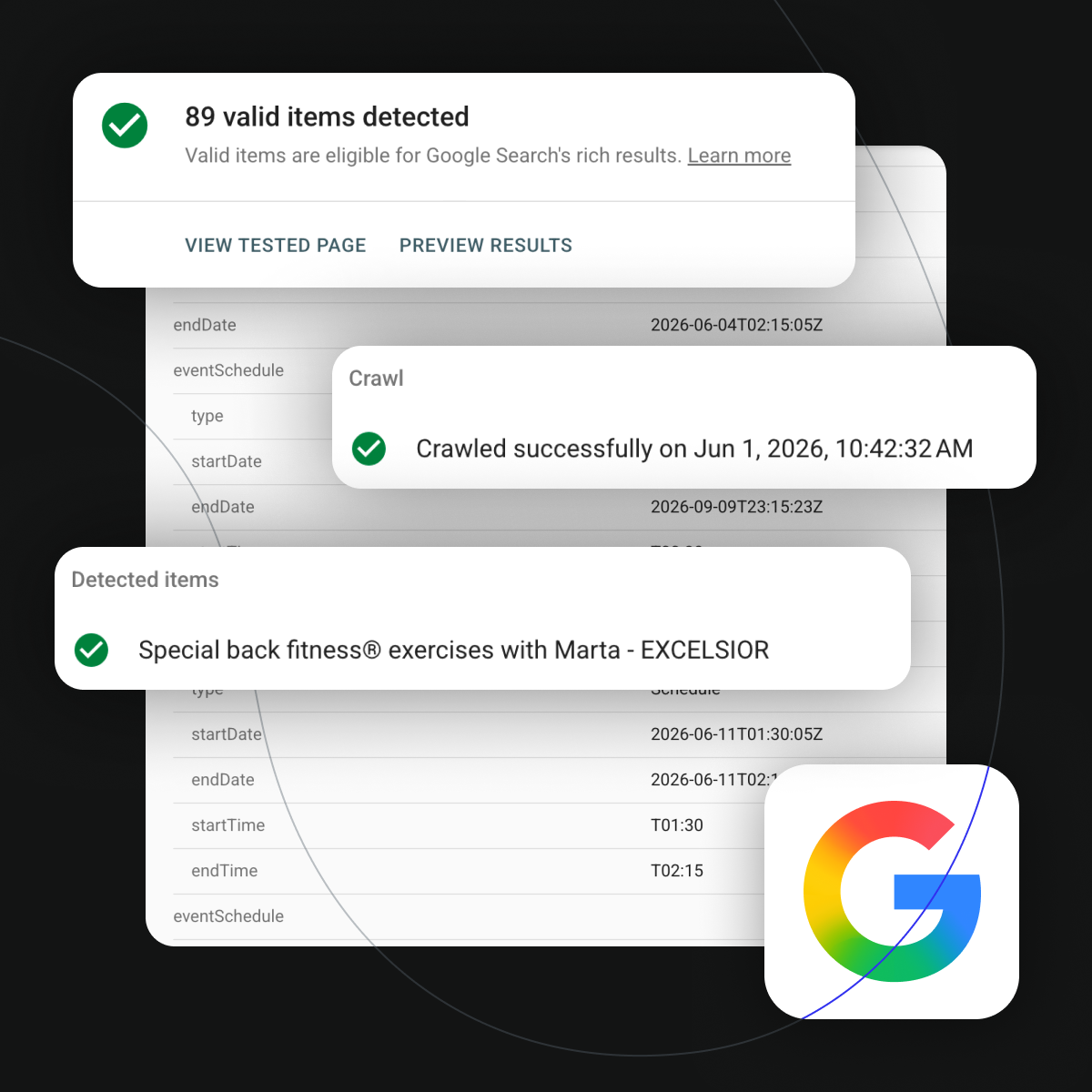
AI crawlers do not read websites like humans do. They look for structured data, ideally in JSON-LD format. Giggle injects this data dynamically. When a hotel embeds the Giggle widget on its website, it does not just load a visually appealing experience menu – it simultaneously spins an invisible, machine-readable data network (@graph).
This network links the hotel (@type: Hotel), the location (@type: Place), and the individual experiences (@type: Event) together. Each experience is tagged with price, currency, availability, and a unique ID. For AI systems, this is a feast: they do not have to interpret texts but get the facts served on a silver platter.
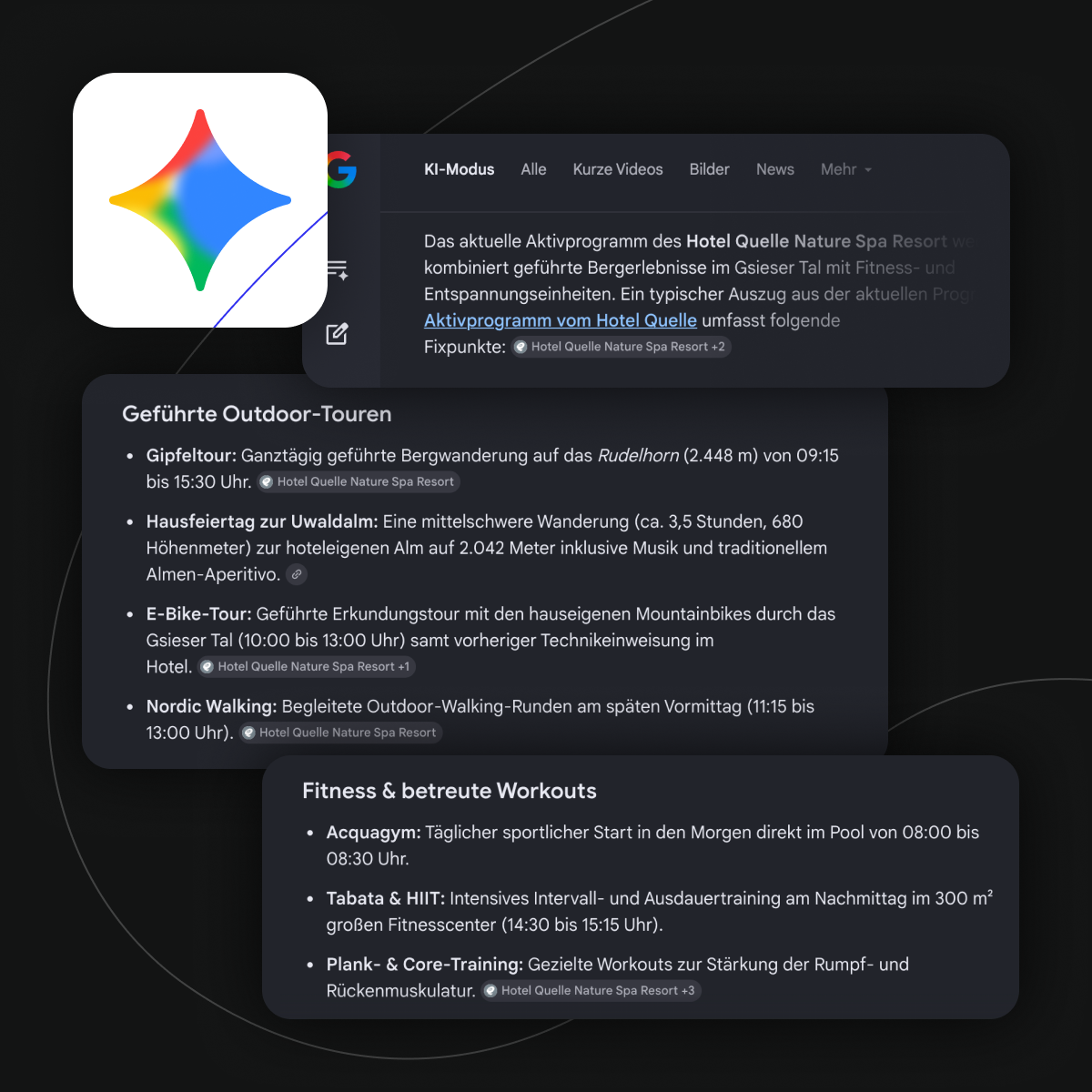
Google AI Mode (AI Overviews) rewards structured data with prominent, detailed answer cards – as seen here with the active program of Hotel Quelle Nature Spa Resort.
2. Server-Side Rendering (SSR) for Maximum Crawlability
A common problem with modern websites: they load content dynamically via JavaScript (Client-Side Rendering). However, many AI crawlers, including OpenAI's GPTBot, do not execute JavaScript. They only see the bare source code. If the experiences are not there, they do not exist for the AI.
Giggle has solved this problem through consistent Server-Side Rendering (SSR) on the host pages. The experiences are already fully present in the initial HTML document – including all JSON-LD structures. An AI crawler immediately finds all relevant information without having to execute a single JavaScript command.
3. Targeted Crawler Management via robots.txt
Visibility in AI systems starts with the robots.txt. Those who make mistakes here lock themselves out of the future. Giggle maintains a highly optimized robots.txt that explicitly controls over 30 specific AI crawlers (such as GPTBot, ClaudeBot, PerplexityBot). This ensures that the right bots can index the right content while irrelevant traffic is blocked.
4. The Next Step: AI Discovery Feeds and llms.txt
Giggle is already thinking ahead. With concepts like the AI Discovery Feed (/.well-known/giggle-ai.json) and the implementation of llms.txt files, Giggle is creating dedicated interfaces designed exclusively for AI systems. These feeds bundle all of a hotel's experiences into a single, highly structured file that can reside directly on the hotel's domain. This strengthens the hotel's domain authority and makes the detour via third-party platforms obsolete for the AI.
The Multichannel Approach: Maintain Once, Visible Everywhere
Giggle's strength lies not only in its technical depth but in its consistent multichannel distribution. Hoteliers maintain their experiences in a central location within the Giggle portal. From there, they are automatically distributed:
Particularly noteworthy is the Experience API: It allows hotels and their technology partners native integrations with complete creative freedom. Whether it is a custom app, in-room TV system, digital guest directory, or an entirely individual frontend – the API delivers all experience data in a structured format and in real time. Hotels are not limited to standard channels but can distribute their experiences wherever they want to reach guests.
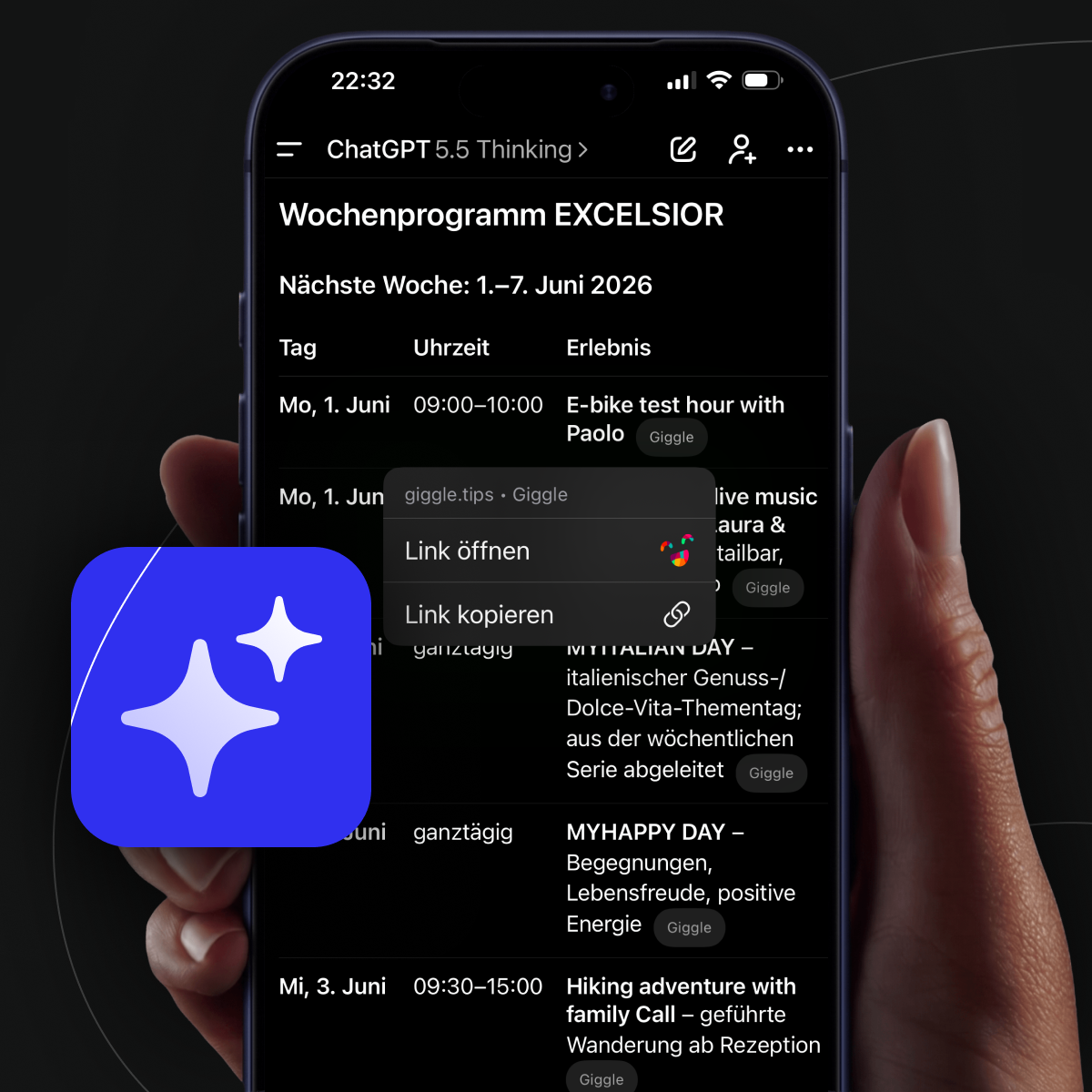
<img src="/home/ubuntu/upload/IMG_7998.webp" alt="ChatGPT Weekly Program Excelsior" width="400"/>
ChatGPT generates day-specific weekly programs (here for the Excelsior) with concrete times and direct booking links via Giggle.
Conclusion: Why Giggle is the Best Decision for Hotels
The transformation from traditional search to AI-powered answers is in full swing. Hotels that do not make their experiences machine-readable will simply no longer appear in the recommendations of ChatGPT, Perplexity, and Google AI Overviews.
Giggle.tips is much more than just a beautiful widget for the hotel website. It is a highly complex, AI-optimized data infrastructure working in the background. Through clean Schema structures, Server-Side Rendering, intelligent crawler management, and a consistent multichannel approach, Giggle ensures that the experiences of its partner hotels appear exactly where tomorrow's guests are searching: in the direct answers of Artificial Intelligence.
Those who choose Giggle today are not only investing in a better guest experience on their own website but are securing visibility in the most important technological development of this decade.
Published
June 1, 2026
Category
Trends